1976 World Champion · Formula 1

James Hunt

A privateer's driver who beat Ferrari, then took a world title by a single point in the rain at Fuji. The official Hunt collection: Hesketh, Japan, and the commentary box.

Nationality
British
Born
29 August 1947 · Belmont, Surrey, England
Died
15 June 1993 · Wimbledon, London, England
Teams
Hesketh · McLaren · Wolf
Championship
1 (1976)
After racing
BBC Formula 1 commentator (1980–1993)
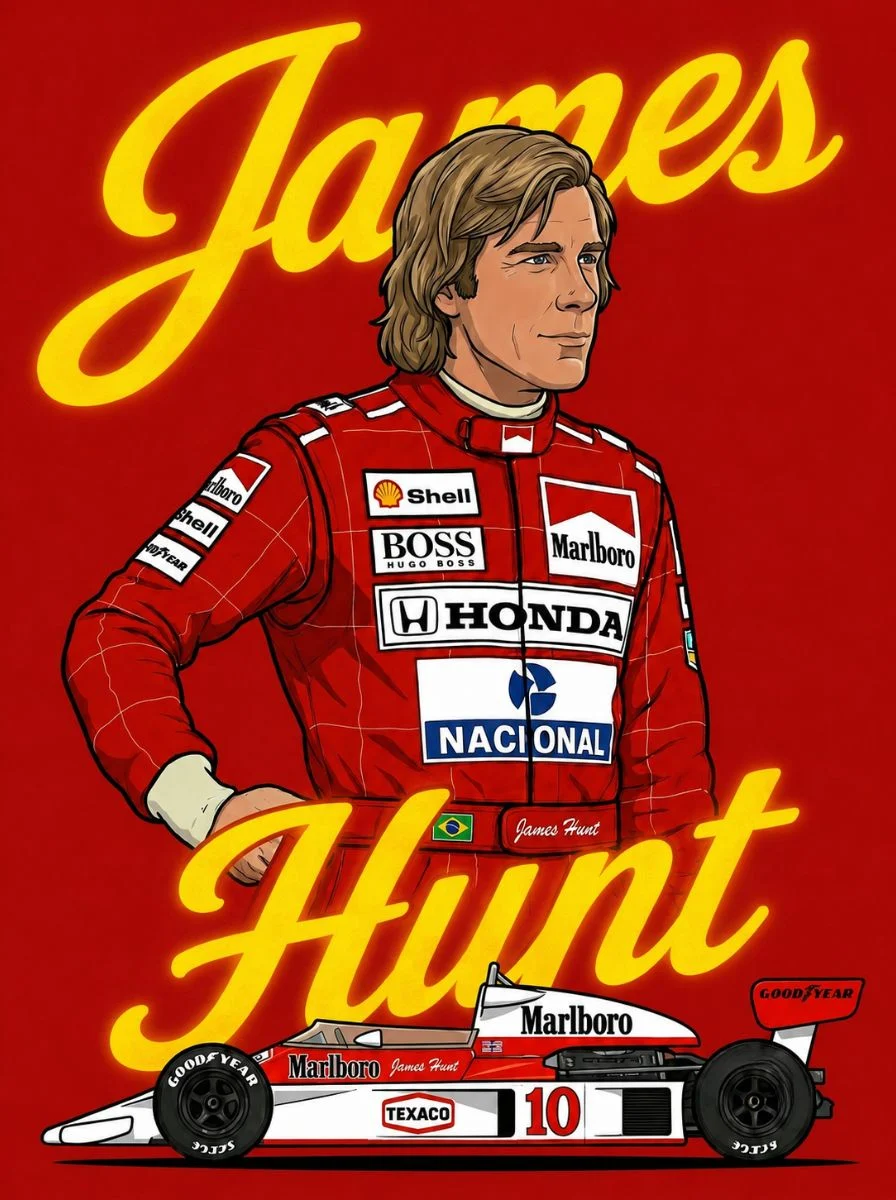
Graphic illustration of legendary Formula 1 World Champion James Hunt wearing his red racing suit, featuring his red and white race car and name lettering against a red background.
1976 World Champion
1973 — 1979
1
World Championship
10
Grand Prix Wins
14
Pole Positions
23
Podium Finishes

Who was James Hunt?

James Hunt (29 August 1947 – 15 June 1993) was a British Formula 1 driver who won the 1976 World Championship with McLaren. He took 10 Grand Prix wins, 14 pole positions and 23 podium finishes from 92 starts, driving for Hesketh, McLaren and Wolf. He retired in 1979 and commentated on Formula 1 for the BBC until his death at 45.

Full name
James Simon Wallis Hunt
Nationality
British
F1 career
1973–1979
Best known for
The 1976 title, decided in the rain at Fuji
Rider Profile

Who Was James Hunt?

James Hunt was a British racing driver who won the 1976 Formula 1 World Championship with McLaren, and later became a broadcaster for the BBC.

Hesketh He reached Formula 1 in 1973 with Hesketh Racing, the team of the aristocrat Lord Alexander Hesketh, which the paddock initially treated as a joke. In 1975 Hunt beat Niki Lauda’s Ferrari to win the Dutch Grand Prix at Zandvoort. Hesketh withdrew at the end of that season and Hunt was without a drive.

1976 McLaren had an unexpected vacancy when Emerson Fittipaldi left, and Hunt filled it. He won six races that season, closing on Lauda after the Austrian’s near-fatal accident at the Nürburgring, and took the title at the final round in Japan. He won ten Grands Prix in all, from 14 pole positions and 23 podium finishes.

After Racing He retired mid-season in 1979 and joined BBC television’s Formula 1 coverage alongside Murray Walker the following year, where he became known for blunt, unfiltered commentary. He died of a heart attack on 15 June 1993, aged 45.
The Career

Three Chapters That Defined James Hunt

Chapter 01

The Good Lord's Team

Lord Alexander Hesketh knew little about motorsport and a great deal about spending money, and the team he built around Hunt arrived in Formula 1 in 1974 to open ridicule — a squad noted for consuming as much champagne as fuel. The mockery stopped at Zandvoort in 1975, where Hunt's Hesketh beat Niki Lauda's Ferrari to win the Dutch Grand Prix. At the end of that season Hesketh ran out of money and Hunt was out of a job.

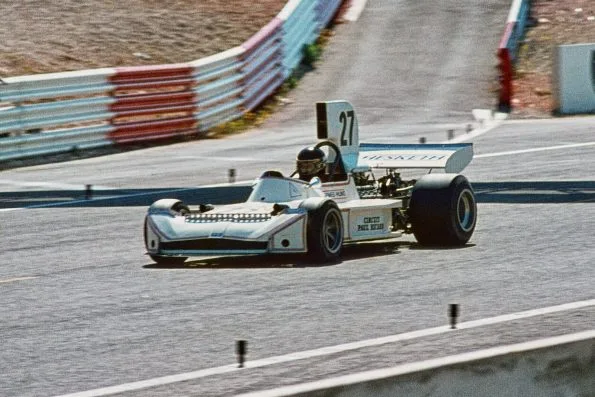
James Hunt driving the Hesketh-entered March 731 at the 1973 French Grand Prix Hesketh March 731 · France, 1973 Photo: James Hunt, Hesketh-run March 731 — 1973 French Grand Prix by 50DAG2026 / Wikimedia Commons, CC0 (cropped and resized) · licence
Chapter 02

Fuji, in the Rain

McLaren needed a driver when Emerson Fittipaldi left, and Hunt was the only experienced one available. Lauda led the championship until his near-fatal crash at the Nürburgring; Hunt won that race and five more to force a decider in Japan. The rain at Fuji was heavy enough that Lauda parked his Ferrari after two laps rather than take the risk. Hunt stayed out, finished third, and won the title by a single point.

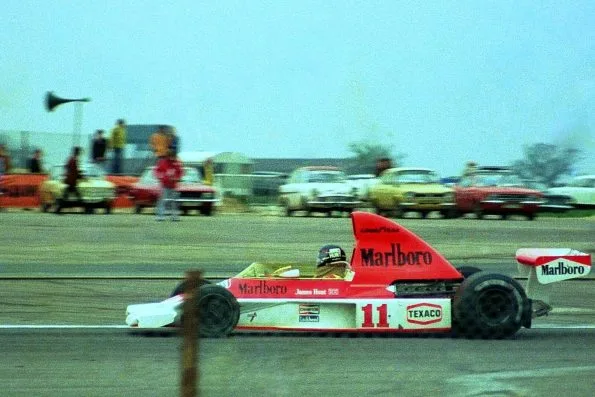
James Hunt in the Texaco-Marlboro McLaren M23 at Silverstone in 1976 McLaren M23 · Silverstone, 1976 Photo: James Hunt, McLaren M23 — 1976 International Trophy, Silverstone by Martin Lee / Wikimedia Commons, CC BY-SA 2.0 (cropped and resized) · licence
Chapter 03

The Commentary Box

He retired mid-season in 1979, aged thirty-one, having admitted he never much enjoyed driving. In 1980 he joined Murray Walker on BBC television's Formula 1 coverage, took it lightly at first — two bottles of wine during his first broadcast — and became one of the most respected and least diplomatic commentators the sport has had. On 15 June 1993 he proposed to his partner Helen; hours later he suffered a heart attack and died, aged forty-five.

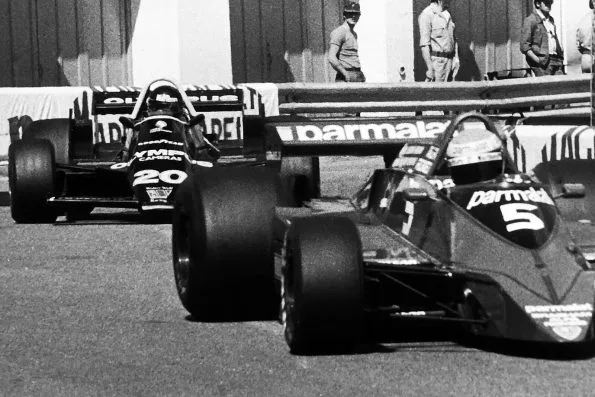
James Hunt in his Wolf WR7 trailing behind Niki Lauda's Brabham BT48 as they enter Rascasse during the 1979 Monaco Grand Prix practice. Wolf WR7 · Monaco, 1979 Photo: James Hunt in his Wolf WR7 by Martin Lee from London, UK — CC BY-SA 2.0. Cropped and resized. · licence
Career Timeline

James Hunt Career Timeline: 1947–1993

Born in Surrey

James Simon Wallis Hunt is born on 29 August in Belmont, Surrey, the son of a London stockbroker.

First Race

Sees his first race at Silverstone on his eighteenth birthday and decides to become World Champion.

Hunt the Shunt

A reputation for large accidents in Formula 3 earns the nickname, and the attention of Lord Hesketh.

Formula 1 Debut

Debuts for Hesketh Racing at the Monaco Grand Prix and finishes the season eighth.

First Win

Beats Niki Lauda's Ferrari to win the Dutch Grand Prix at Zandvoort for Hesketh.

McLaren

Signs for McLaren after Emerson Fittipaldi leaves the team.

World Champion

Six wins, eight poles, and the title decided at Fuji in the rain.

Three More Wins

Wins in Britain, the United States and Japan, and finishes fifth overall.

Retirement

Leaves Wolf and Formula 1 mid-season, aged thirty-one.

The BBC

Joins Murray Walker in the commentary box, where he stays for thirteen years.

Death

Dies of a heart attack in Wimbledon on 15 June, aged forty-five.

By the Numbers

James Hunt F1 Career Record, Season by Season

James Hunt season-by-season record: team, wins, poles, podiums, points and final standing.
SeasonTeam Wins Poles Podiums Points Pos.
1973 Hesketh 0 0 2 14 8
1974 Hesketh 0 0 3 15 8
1975 Hesketh 1 0 4 33 4
1976 McLaren 6 8 8 69 1
1977 McLaren 3 6 5 40 5
1978 McLaren 0 0 1 8 13
1979 Wolf 0 0 0 0 NC

The championship season is highlighted. Career totals: 10 wins · 14 pole positions · 23 podiums · 8 fastest laps · 179 points from 92 Grand Prix starts. Wikipedia records 93 entries and StatsF1 94; the difference is in how each counts weekends he entered but did not start. He was not classified in 1979, retiring mid-season. Figures verified 14 August 2026.

James Hunt in his own words

In His Own Words
For reasons of self-preservation.
James Hunt · on why he retired mid-season in 1979
Frequently Asked

James Hunt: Frequently Asked Questions

How many races did James Hunt win?

Ten Grands Prix from 92 starts, along with 14 pole positions, 23 podium finishes and eight fastest laps. His first win came for Hesketh at Zandvoort in 1975 and his last for McLaren in Japan in 1977.

How did James Hunt win the 1976 World Championship?

At the final round in Japan. Niki Lauda had led the championship until his near-fatal crash at the Nürburgring; Hunt won six races to close the gap. Torrential rain at Fuji led Lauda to withdraw after two laps, and Hunt finished third to take the title by a single point.

Which teams did James Hunt drive for?

Three. Hesketh Racing from 1973 to 1975, McLaren from 1976 to 1978, and Wolf for part of 1979.

Why was James Hunt called Hunt the Shunt?

The nickname came from his Formula 3 years, when a series of large accidents made his reputation before his results did. One early Formula Ford crash put his car into a lake.

Why did James Hunt retire?

He left mid-season in 1979, aged thirty-one, saying it was for reasons of self-preservation. He had admitted that he never really enjoyed driving, and his enthusiasm had faded after winning the championship.

What did James Hunt do after racing?

He joined BBC television's Formula 1 coverage in 1980 alongside Murray Walker, and commentated for thirteen years. He became known for blunt, unfiltered opinions delivered in a cultivated accent.

How did James Hunt die?

Of a heart attack, at his home in Wimbledon on 15 June 1993, aged 45. He had proposed to his partner Helen only hours earlier.

Were James Hunt and Niki Lauda friends?

Yes. Despite the rivalry of 1976 they were close friends. After Hunt's death Lauda said he was the most charismatic personality ever to have been in Formula 1.

Shop His Gear

James Hunt Collection

No products assigned to this rider yet. Add products to the “James Hunt” racer in the product editor.

References

Sources & Further Reading

Every statistic on this page is drawn from the following records.

  1. James Hunt — Hall of Fame profile · Formula1.com (official)
  2. 1976 James Hunt driver standings · Formula1.com (official)
  3. James Hunt — season-by-season statistics · StatsF1
  4. James Hunt driver database · Motor Sport Magazine
  5. McLaren Racing — official site · McLaren Racing (official)
  6. James Hunt · Wikipedia
  7. James Hunt (Q140393) · Wikidata entity record

How this page is made

Rider profiles are compiled from official series records and cross-checked against independent statistical databases before publication.

Commercial disclosure. This page links to merchandise sold by KozmozInspire. Products are fan-made tributes inspired by motorsport history and are not affiliated with, endorsed by, or licensed from the rider, their estate, or any team.

Last reviewed .

0 View cart