Spec chassis, two engines
Every team races an identical Dallara chassis; only the choice of Honda or Chevrolet power sets cars apart.

Ovals, road courses and city streets in a single championship — the spec cars, teams and drivers behind North America’s most versatile motorsport series.
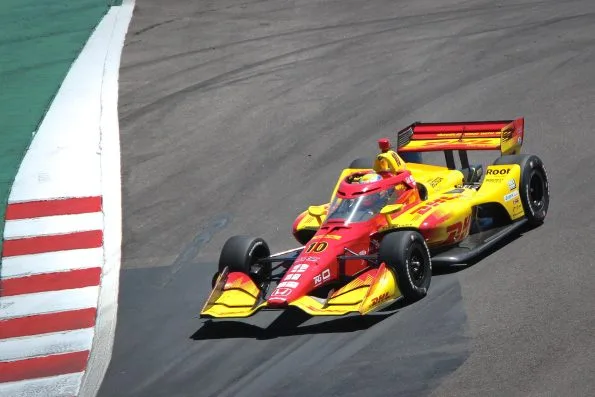
IndyCar — officially the NTT INDYCAR SERIES — is North America’s premier open-wheel racing championship, self-sanctioned by INDYCAR, LLC and headlined by the Indianapolis 500. Every team races an identical spec Dallara chassis powered by a Honda or Chevrolet twin-turbo V6 with a hybrid energy-recovery system, so competition turns on driver skill, strategy and setup rather than chassis development. The series is owned by Penske Entertainment Corp.
American championship car racing goes back to the early years of motorsport, though the pre-1916 national titles were assigned retroactively by historians rather than awarded at the time, and are still disputed. The date nobody argues about is 1911, when the Indianapolis Motor Speedway ran the first Indianapolis 500.
For most of the twentieth century the discipline ran under AAA and then USAC sanction, before CART took the leading teams into a series of their own in 1979. In 1996 Tony George founded the Indy Racing League around the Indianapolis 500, splitting American open-wheel racing in two for over a decade.
The split ended in 2008, when the IRL absorbed Champ Car and the two record books were merged. The unified championship became the IndyCar Series, and since 2020 it has been owned by Penske Entertainment Corp.
One spec car, three completely different kinds of circuit, and the biggest single race in motorsport.
Every team races an identical Dallara chassis; only the choice of Honda or Chevrolet power sets cars apart.
Ovals, permanent road courses and temporary street circuits all count toward a single championship in the same season.
A limited, driver-controlled horsepower boost turns overtaking into a strategic resource on road and street courses.
Drivers muscle every corner by hand — a physical demand unlike almost any other modern single-seater series.
Teams run multiple sessions across ovals, road courses and street circuits, each demanding its own aero and mechanical setup.
Format depends on the venue: single-lap runs on ovals, a multi-day, multi-round shootout at the Indianapolis 500, or knockout segments ending in the Firestone Fast Six on road and street courses.
Points are awarded to entrants, drivers and manufacturers, with push-to-pass and pit strategy often deciding the result.
The Indianapolis 500 runs to its own two-week schedule, with a separate qualifying weekend that sets the 33-car field.
| Pos | Points | Pos | Points |
|---|---|---|---|
| 1st | 50 | 9th | 22 |
| 2nd | 40 | 10th | 20 |
| 3rd | 35 | 11th | 19 |
| 4th | 32 | 12th | 18 |
| 5th | 30 | 13th | 17 |
| 6th | 28 | 14th | 16 |
| 7th | 26 | 15th | 15 |
| 8th | 24 | 16th and below | 13 down to 5 |
Points continue to scale down below 15th place, from 13 for 16th to a minimum of 5.
| Round | Race | Circuit | Date |
|---|---|---|---|
| 01 | St. Petersburg GP | Streets of St. Petersburg, FL | 1 March |
| 02 | Phoenix | Phoenix Raceway | 7 March |
| 03 | Arlington GP | Streets of Arlington, TX | 15 March |
| 04 | Alabama Grand Prix | Barber Motorsports Park | 29 March |
| 05 | Long Beach GP | Streets of Long Beach, CA | 19 April |
| 06 | Sonsio Grand Prix | IMS Road Course | 9 May |
| 07 | Indianapolis 500 | Indianapolis Motor Speedway (oval) | 24 May |
| 08 | Detroit GP | Streets of Detroit, MI | 31 May |
| 09 | Bommarito 500 | World Wide Technology Raceway | 7 June |
| 10 | Road America GP | Road America | 21 June |
| 11 | Mid-Ohio GP | Mid-Ohio Sports Car Course | 5 July |
| 12 | Music City GP | Nashville Superspeedway | 19 July |
| 13 | Grand Prix of Portland | Portland International Raceway | 9 August |
| 14 | Markham GP | Streets of Markham, ON | 16 August |
| 15 | Freedom 250 | Streets of Washington, D.C. | 23 August |
| 16 | Milwaukee Mile 250 (1) | Milwaukee Mile | 29 August |
| 17 | Milwaukee Mile 250 (2) | Milwaukee Mile | 30 August |
| 18 | Grand Prix of Monterey | WeatherTech Raceway Laguna Seca | 6 September |
Last updated: 6 September 2026, the day of the Monterey season finale. Verify current dates with the official IndyCar schedule.
Built originally as a vehicle-testing facility before becoming the sport's spiritual home.
The AAA sanctions the inaugural 500-mile race at the new Indianapolis Motor Speedway.
Team owners split from USAC to form Championship Auto Racing Teams, creating rival national championships.
Tony George launches a rival series, dividing American open-wheel racing for over a decade.
The Indy Racing League absorbs Champ Car, reuniting the sport under the IndyCar banner.
Named for Dan Wheldon, it becomes the series' first fully spec chassis.
A titanium-framed cockpit shield is introduced fleet-wide after a string of fatal accidents.
IndyCar introduces its first hybrid energy-recovery powertrain.
Traditional front-engine dirt and oval cars defined American Championship racing before the rear-engine revolution.
Formed after AAA withdrew from racing, USAC sanctioned the championship through turbocharged Offenhauser and Ford power.
Team-owner-led competition and manufacturer-built chassis pushed technical development until a 2003 bankruptcy forced reorganisation.
The Dallara DW12 becomes the sole chassis for every team, a deliberate cost-control and parity measure.
Cockpit protection becomes standard fleet-wide, a direct response to fatal accidents.
A first-generation hybrid energy-recovery system arrives ahead of an all-new chassis and engine formula planned for 2027–2028.
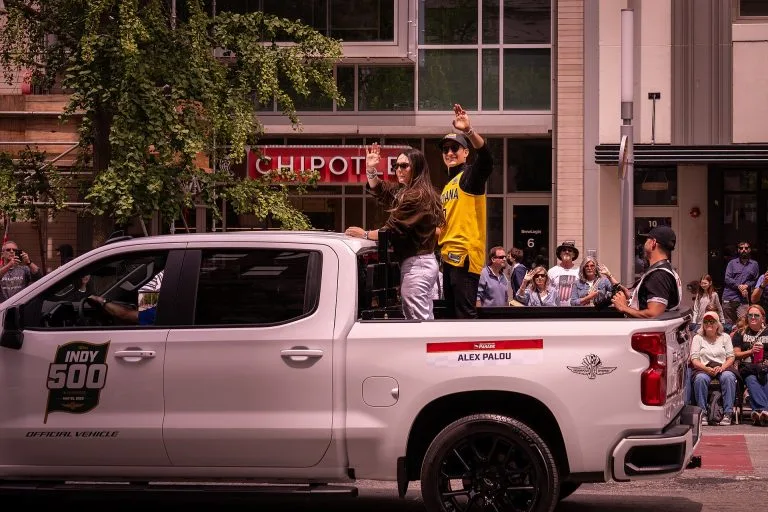
2026 NTT INDYCAR SERIES Champion · Chip Ganassi Racing · fifth title, fourth in a row
Seven national championships and four Indianapolis 500 wins — the winningest driver in the sport's history.
Four national championships and the only driver to win the Indy 500, Daytona 500 and a Formula 1 World Championship.
Three CART championships and four Indianapolis 500 wins, all with Team Penske; holds the Indy 500 pole record.
Six championships with Chip Ganassi Racing — the most of any active driver and second only to Foyt all-time.
Four Indianapolis 500 wins, tied for the all-time record among a select group of legends.
Two championships with Team Penske, in 2014 and 2022, built on a reputation for outright single-lap speed.
Two championships and back-to-back Indianapolis 500 wins in 2023 and 2024, all with Team Penske.
Five titles in six seasons and four in a row through 2026 — the fastest to five in American open-wheel history.
Team owners break away to form CART, launching parallel, competing national championships for the first time.
Tony George's Indy Racing League divides American open-wheel racing for over a decade, widely blamed for weakening the sport's mainstream reach.
The Indy Racing League absorbs Champ Car, ending the 12-year split between rival American open-wheel championships.
A 15-car accident at Las Vegas Motor Speedway leads to sweeping safety changes; the following spec chassis is named the DW12 in his honour.
Struck by flying debris at Pocono, his death directly leads to development of the aeroscreen.
Roger Penske buys the Indianapolis Motor Speedway and the IndyCar Series, ending 74 years of Hulman family ownership.
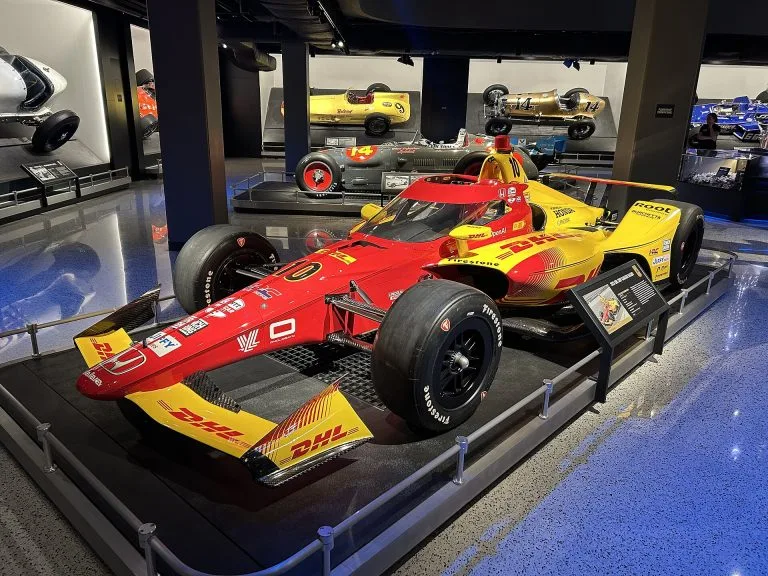
Álex Palou’s 2026 title team · Indianapolis, Indiana
IndyCar is North America's premier open-wheel racing series, sanctioned by INDYCAR, LLC and headlined by the Indianapolis 500.
Points are awarded to entrants, drivers and manufacturers each race, with the highest total at season's end winning the respective championship. The Indianapolis 500 also awards bonus points for qualifying position.
IndyCar's centrepiece race — a 500-mile oval event at Indianapolis Motor Speedway, first run in 1911 and often called "The Greatest Spectacle in Racing."
IndyCar is unique in mixing all three track types in one championship, requiring different aero and mechanical setups per venue — a deliberate differentiator from series that race only one type of circuit.
A driver-activated, temporary horsepower boost used strategically on road and street courses, limited in total uses per race.
Four drivers are tied at four wins each: A.J. Foyt, Al Unser, Rick Mears and Hélio Castroneves.
A.J. Foyt leads all-time with seven national titles; among active drivers, Scott Dixon leads with six.
A single spec Dallara chassis for every team, with a choice of two engine suppliers — Honda or Chevrolet — running 2.2-litre twin-turbo V6 hybrid engines.
The 1996–2008 division of American open-wheel racing into two rival championships — the CART/Champ Car series and the Indy Racing League — widely blamed for weakening the sport's mainstream popularity before the 2008 reunification.
Álex Palou, for Chip Ganassi Racing — his fifth NTT INDYCAR SERIES title and fourth in a row, clinched at the Milwaukee Mile with a round still to run. Only Sébastien Bourdais had previously won four straight.
Yes — introduced in 2024, an energy-recovery hybrid system was added to the existing twin-turbo V6, the series' first hybrid powertrain.
No. Unless a product page explicitly states otherwise, Kozmozracing is an independent store and is not affiliated with or endorsed by INDYCAR, LLC, any team or driver.
Independent fan guide: Formats, teams and regulations can change. Verify current sporting information with INDYCAR. Championship, team and driver names belong to their respective rights holders.
No products are assigned to IndyCar yet. Add products to this series in the product editor.