Four championships, one rung
TCR Europe, TCR Eastern Europe, TCR South America and TCR Asia. There is no combined regional title — each crowns its own champion — but all four sit at the same level of the pyramid and run the same machinery.

Four championships on three continents, one car specification, and a ladder that people actually climb. This is the rung between the national TCR series and the World Tour.
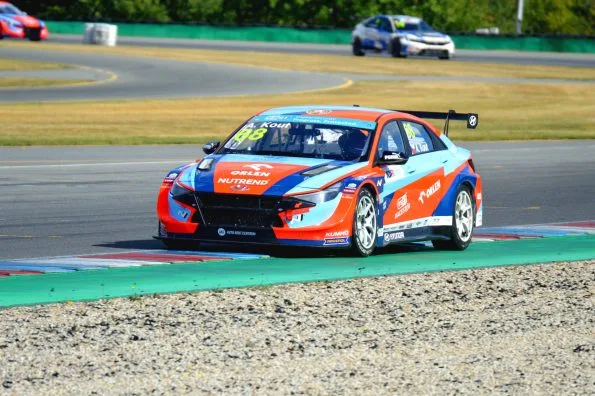
TCR Regional is not one championship. It is the continental tier of the TCR pyramid, sitting between the national TCR series below and the FIA TCR World Tour above. Four championships occupy that level in 2026: the TCR Europe Touring Car Series, TCR Eastern Europe, TCR South America and the TCR Asia Series. They do not race each other for a shared title — each has its own champion — but they run identical machinery, because a TCR car homologated by the WSC Group is eligible in every series that uses the rules. TCR Europe is the flagship, with six rounds and twelve races in 2026, and the tier feeds the level above it: three of the top five in the 2026 World Tour standings — Mikel Azcona, Aurélien Comte and Santiago Urrutia — are former TCR Europe champions or podium finishers.
The regional tier did not start in Europe. On 14 August 2014, before any of it existed on track, the organisation behind TCR announced a TC3 Asia Series — later renamed TCR Asia — to be run by David Sonenscher’s Motorsport Asia. Seven races were planned for 2015, cut to five, and finally held as four, two of them alongside the TCR International Series.
Europe came a year later, and modestly. On 15 October 2015 Marcello Lotti revealed a plan for a European series built from one round of each existing national TCR championship — Italy, Spain, Germany, Portugal, Russia and Benelux. It launched on 26 February 2016 as the TCR European Trophy with six rounds. It is worth noticing that this is the same idea the World Tour would be built on seven years later.
In Europe it outgrew the plan. A one-off two-race event format arrived in 2017, and in 2018 it was upgraded to the TCR Europe Touring Car Series proper: seven standalone events, five of them supporting the International GT Open. By 2019 it had around thirty cars.
The other two followed. WSC and Race Event Management created the TCR Eastern Europe Trophy for 2019, open only to Eastern European teams and drivers. TCR South America was announced on 4 March 2020, headed by Felipe McGough and Maurizio Slaviero, a former president of Stock Car Brasil, and ran its first season in 2021.
Four separate championships, one shared car, and a route upward that is used rather than advertised.
TCR Europe, TCR Eastern Europe, TCR South America and TCR Asia. There is no combined regional title — each crowns its own champion — but all four sit at the same level of the pyramid and run the same machinery.
That is the entire design. A WSC-homologated TCR car is eligible in every TCR series, so a team can contest a regional championship at home, enter a national round, and turn up at a World Tour weekend without building anything new.
Ignacio Montenegro won TCR South America in 2023 and finished third in TCR Europe in 2024. Jenson Brickley won TCR Europe in 2025 and is a full-season World Tour entry in 2026. Mikel Azcona won TCR Europe twice, then the WTCR, and is second in the 2026 World Tour.
TCR Europe and TCR Eastern Europe held a joint race at Brno in 2024, won by TCR Europe's Franco Girolami with Eastern Europe's Maťo Homola third. In 2026 the World Tour's Korean and Chinese rounds are TCR Asia Series meetings.
TCR Europe runs two races at each of six rounds. TCR Eastern Europe runs two at each of five events, except Salzburgring, which has three, for eleven in all. TCR South America runs two per round across ten rounds, plus an endurance race at Interlagos.
TCR Europe pays qualifying points to the top six — 10, 8, 6, 4, 2 and 1 — on top of the race scale, so Saturday is worth a third of a race win.
Regional TCR rounds travel with bigger packages: TCR Europe with the International GT Open and Euroformula Open, TCR South America with the Stock Car Pro Series, TCR Eastern Europe with the Formula 4 CEZ Championship.
Each championship sets its own sporting regulations. The car specification is what they share, not the rulebook.
| Pos | Race | Qualifying |
|---|---|---|
| 1st | 30 | 10 |
| 2nd | 25 | 8 |
| 3rd | 22 | 6 |
| 4th | 20 | 4 |
| 5th | 18 | 2 |
| 6th | 16 | 1 |
| 7th | 14 | – |
| 8th | 12 | – |
| 9th | 10 | – |
| 10th | 8 | – |
| 11th | 6 | – |
| 12th | 4 | – |
| 13th | 3 | – |
| 14th | 2 | – |
| 15th | 1 | – |
WSC also publishes the Kumho TCR World Ranking across every series that uses the rules. It has teeth: the TCR Europe Cup defines a “professional” driver partly as anyone who finished in the top 50 of that ranking in 2024 or 2025.
This is the TCR Europe scale. Each regional championship sets its own points, and the race scale here matches the one the FIA TCR World Tour uses.
| Round | Circuit | Country | Dates |
|---|---|---|---|
| 1 | Mugello Circuit | Italy | 20–22 March |
| 2 | Circuit de Spa-Francorchamps | Belgium | 15–17 May |
| 3 | Circuit Paul Ricard | France | 5–7 June |
| 4 | Hungaroring | Hungary | 3–5 July |
| 5 | Autodromo Nazionale Monza | Italy | 25–27 September |
| 6 | Circuit de Barcelona-Catalunya | Spain | 23–25 October |
Six rounds and twelve races, all in Europe, most of them supporting the International GT Open. The other three run their own calendars: TCR Eastern Europe, five events and eleven races from Grobnik in Croatia to the Hungaroring; TCR South America, ten rounds across Brazil, Argentina and Uruguay ending at El Pinar on 4–6 December; and TCR Asia, whose 2026 meetings host the World Tour rounds in Korea and China.
WSC Group publishes the TCR ruleset and the FIA approves it in December. A TC3 Asia Series is announced on 14 August, before any European series exists.
The first regional championship runs four races, two of them alongside the TCR International Series. Michael Choi is the first regional champion.
Lotti's plan to borrow one round from each national championship launches on 26 February as the TCR European Trophy. Pierre-Yves Corthals wins it in an Opel Astra.
The Trophy becomes a standalone seven-event championship, five rounds supporting the International GT Open. Mikel Azcona is champion.
WSC and Race Event Management create the TCR Eastern Europe Trophy, open only to Eastern European teams and drivers. Milovan Vesnić takes the first title.
TCR Europe's season is pushed to late August and run with SRO support on a 25-car grid. TCR Asia is cancelled outright.
Announced in March 2020 and headed by Felipe McGough and former Stock Car Brasil president Maurizio Slaviero, TCR South America runs its first season. Pepe Oriola is champion.
TCR Brazil launches beneath TCR South America. TCR Asia is not held at all.
TCR Europe reaches a tenth season, Eastern Europe an eighth, South America a fifth. The TCR Europe Cup runs its first race — and its second is cancelled.
Domestic championships running the same cars. Their competitors can score World Tour points when the World Tour visits their round.
The continental championships — the subject of this page. Four of them in 2026.
Since 2023, and assembled from rounds of the series below it. Before it came the TCR International Series from 2015 and the FIA's World Touring Car Cup from 2018.
Endurance and multi-class championships that accept TCR cars as one class among several rather than as their premier class.
Won the 2025 TCR Europe Touring Car Series for Monlau Motorsport in a Cupra León VZ, ahead of Teddy and Jimmy Clairet, and took Monlau its first teams' title with him. He moved straight up: in 2026 he is a full-season FIA TCR World Tour entry, and he led a World Tour race outright at Valencia before retiring from it.
Won TCR Europe in 2018 in a SEAT León and again in 2021 in a Cupra, then the WTCR title in 2022. Second in the 2026 World Tour standings.
Won TCR Europe in 2022 in an Audi and 2024 in a Cupra. Won the joint TCR Europe and TCR Eastern Europe race at Brno in 2024.
Champion for Monlau Motorsport in a Cupra, and a full-season World Tour entry the following year.
Slovak, and champion of TCR Eastern Europe in 2023 and 2024 in a Hyundai Elantra N. Third in that joint Brno race, behind two TCR Europe drivers.
Czech, leading TCR Eastern Europe on 187 points with six wins from the first nine races — seven ahead of the reigning champion Adam Kout.
Argentine, won TCR South America in 2025 with Honda YPF Racing and leads the 2026 championship after five of ten rounds.
Won TCR South America in 2023 with Squadra Martino, then finished third in TCR Europe in 2024 — the regional ladder working sideways as well as up.
Won TCR Asia in 2018 and 2019 for his family's Liqui Moly Team Engstler, which took four consecutive Asian teams' titles from 2016.
The tier started in Asia in 2015, not Europe, and Asia has been the least stable part of it: cancelled in 2020, not held at all in 2023, and running Sailun tyres where the other three use Kumho. Its 2026 meetings host the World Tour's Korean and Chinese rounds.
TCR Europe began in 2016 by taking one round from each national championship. That is precisely the model the World Tour adopted in 2023 — but in Europe it grew instead into a standalone seven-event championship by 2018, with thirty cars a year later.
Announced on 30 November 2025 as a cheaper, compact series with two drivers sharing each car — an amateur or semi-professional paired with a professional, and a 50% entry-fee discount towards the main series for both champions. Santiago Concepción won the first race. The second was cancelled for unspecified reasons, and no 2027 season has been confirmed.
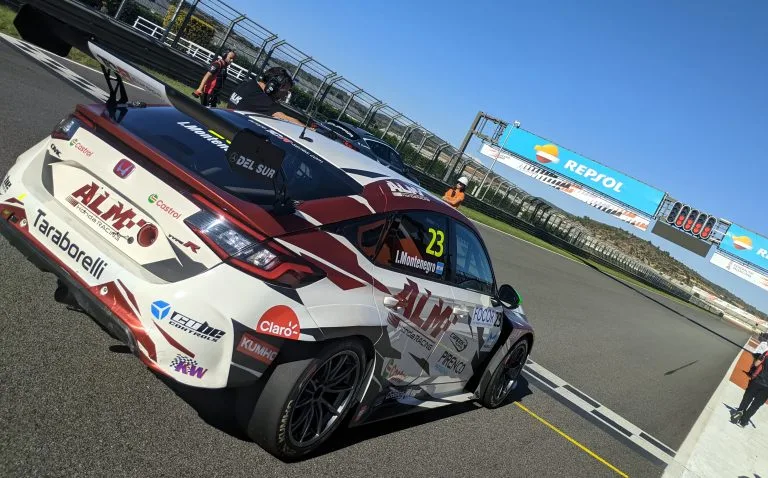
A tenth season in 2026: six rounds, twelve races, mostly in support of the International GT Open. Nicolas Taylor leads on 147 points from Viktor Andersson on 133, with the top eight covered by 38 points and two rounds to run. Its champions include Aurélien Comte, Mikel Azcona twice, Josh Files, Mehdi Bennani, Franco Girolami twice, Tom Coronel and Jenson Brickley — most of whom went on to the world-level championship above it.
The continental tier of the TCR pyramid: the championships that sit above the national TCR series and below the FIA TCR World Tour. Four of them run in 2026.
The TCR Europe Touring Car Series, TCR Eastern Europe, TCR South America and the TCR Asia Series.
No. Each of the four championships crowns its own drivers' and teams' champions. What they share is the car specification and their position in the pyramid.
TCR Europe, in its tenth season in 2026 with six rounds and twelve races, and the series that has supplied most of the World Tour's front-runners.
A racing version of a four- or five-door production car: front-wheel drive, a turbocharged engine of up to two litres making around 355 PS, and a minimum weight of 1,250 kg with a production gearbox. The rules were written by the WSC Group and approved by the FIA in December 2014.
Yes, and that is the point of the system. A WSC-homologated car is eligible in every TCR championship, which is why a regional competitor can enter a national round or a World Tour weekend without building anything new.
Six rounds with two races each, from Mugello in March to Barcelona in October. Qualifying scores points for the top six as well.
Nicolas Taylor on 147 points, ahead of Viktor Andersson on 133 and Marco Butti on 132, with two rounds left.
Jenson Brickley, who won the 2025 title for Monlau Motorsport in a Cupra León VZ.
A regional championship created for 2019 by WSC with Race Event Management, originally restricted to Eastern European teams and drivers. In 2026 it runs five events and eleven races, and Martin Kadlečík leads it.
Announced in March 2020 and first run in 2021, it races in Argentina, Brazil, Chile and Uruguay. The 2026 season is ten rounds with Junior and Trophy classes and a national TCR Brazil championship beneath it.
It was the first regional TCR series, from 2015, but it has been intermittent — cancelled in 2020 and not held at all in 2023. It ran again in 2024 and 2025, and its 2026 meetings host the World Tour's rounds in Korea and China.
A compact, cheaper series announced on 30 November 2025 in which two drivers share one car, an amateur or semi-professional paired with a professional. Santiago Concepción won its first race; the second was cancelled and no 2027 season has been confirmed.
A global ranking WSC publishes across every TCR series. It is used in eligibility rules — the TCR Europe Cup counts a top-50 place in 2024 or 2025 as one definition of a professional driver.
By winning at this level and being invited or funded upward. Jenson Brickley took the 2025 TCR Europe title straight into a full-season 2026 World Tour entry, and Mikel Azcona, Aurélien Comte and Santiago Urrutia all came up the same way.
Independent fan guide: TCR Regional is a tier, not a single championship, and each series sets its own sporting regulations and calendar. Verify current sporting information with the championships directly. Championship, team and driver names belong to their respective rights holders.
No products are assigned to TCR Regional yet. Add products to this series in the product editor.